Most coverage of the Coursera and Udemy merger repeats the press release: 290 million learners, 95,000 instructors, no changes on day one. That part is true. But Udemy was a public company until May 2026, so it had to file annual reports with the SEC, and those reports say more about instructors than any announcement did.
We read Udemy's 10-K filings for 2023, 2024 and 2025, its last earnings release, the instructor letter it filed in 2023 and the FAQ it filed when the deal was announced. Here is what they show, with a link to each source at the end.
LearnHouse publishes this blog and makes a course platform. We kept this piece to what the documents say and mention ourselves once, near the end.
Instructor pay, year by year
Each Udemy annual report states how much instructors earned that year. Put next to total revenue, the trend is clear.
| Year | Udemy revenue | Instructors earned | Share of revenue |
|---|---|---|---|
| 2023 | $728.9M | $208.2M | 28.6% |
| 2024 | $786.6M | $190.6M | 24.2% |
| 2025 | $789.8M | $168M | 21.3% |
The first three columns come from Udemy's filings. The last column is our own division of the two.
Between 2023 and 2025, revenue grew by about 8% and the total paid to instructors fell by about 19%. That is the whole instructor community, not one person. Some instructors earned more, many earned less.
This matters because of what Udemy wrote when it announced the subscription cuts in November 2023. Its letter to instructors said the new rates were set "with the goal that total instructor payouts will equal or exceed their current levels each year." The filings show that did not happen in 2024 or 2025.
Udemy chose to sell fewer single courses
The second thing the filings show is a deliberate change in what Udemy sells.
On its October 2025 earnings call, Udemy's CFO said the company was "intentionally reducing transactional course sales in favor of recurring subscription revenue". The full-year results in February 2026 confirmed it: consumer revenue fell 9% to $265.8 million, which Udemy said "was expected due to Udemy's strategic pivot" toward subscriptions. Consumer subscription revenue grew 44% to $44.5 million, and paid consumer subscribers doubled to 343,000. In the 2025 annual report, 72% of Udemy's total revenue came from subscriptions, up from 66% in 2024.
For an instructor, the channel a learner uses decides how much you get:
| How the learner gets your course | What you keep |
|---|---|
| Buys it through your own coupon or referral link | 97% of the sale |
| Buys it on the marketplace without your link | 37% of the sale |
| Watches it as part of a Udemy subscription | A share of a pool set at 15% of subscription revenue since January 2026 (it was 25% before 2024) |
The percentages come from Udemy's revenue share page and its 2023 instructor letter. When Udemy moves buyers from the second row to the third, the price you set matters less and the time learners spend in your course matters more. That is not good or bad on its own, but it is a different business from the one many instructors signed up for.
What Udemy itself lists as a risk
Annual reports have a section on what could go wrong. Udemy's 2025 report says its changes to the instructor revenue share model "became fully effective in January 2026" and that these changes, along with any future ones, "could result in instructor attrition". It also notes that a small number of instructors create much of the most popular content, and that "instructors may unpublish content or choose to leave the Udemy platform altogether."
That is the company describing the same worry many instructors have, in its own legal filing.
What the merger adds
Coursera and Udemy announced the deal on 17 December 2025 and completed it on 11 May 2026. Udemy is now a wholly owned subsidiary of Coursera.
When the deal was announced, Udemy's instructor FAQ (also filed with the SEC) said the instructor marketplace "will remain a key part of the combined business" and that the announcement had "no impact on Udemy's revenue sharing model". At closing, the companies told instructors there were "no immediate changes to any existing agreements, contracts, economics, or support structures" and that the two platforms would not be integrated on day one.
Note the wording. "No impact" from the announcement and "no immediate changes" are both true, and both leave the future open.
What none of the documents say
- How Udemy's open marketplace, where anyone can publish, will fit with Coursera, which mostly works with universities and companies.
- Whether the revenue share will change after the platforms are combined.
- When the integration will happen, or what it will look like for your courses.
If you read a confident answer to any of these, check where it comes from. As of November 2026, neither company has published one.
What this means for your own decision
The filings describe the platform as a whole. Your own account can look very different, so start there.
Find out which door your buyers use
Open your revenue report and split last year's income into the three rows of the table above. If most of it comes from your own coupons and links, you already bring your own buyers, and you are paying for a storefront. If most of it is marketplace and subscription income, Udemy is finding buyers you would struggle to reach, and leaving would cost you more than the fee.
Keep your original files
Find the source videos, slides and resources for each course. Don't plan on getting them back out of Udemy.
Know what you can and can't send students
Udemy's help center limits instructors to two promotional announcements per course per month, which can only point to your Udemy courses, and four educational announcements, which can link only to free, non-promotional content. Students who bought on Udemy are reached through Udemy.
Remember who keeps access
Udemy's help center says students keep access to a course after it is unpublished, and a course can only be deleted if nobody is enrolled. Leaving does not take your course away from people who bought it, which is fair to them, and it also means you cannot move them with you.
Your options
Stay and watch. If marketplace and subscription income is most of what you earn, staying is reasonable. Keep your files organised and read every terms update.
Spread out. Add another marketplace, or start your own academy for new courses while the older ones stay on Udemy. Many instructors use Udemy for discovery and sell their next course on their own site to people who already know them. We wrote about that approach in the Udemy alternative for your second course.
Move. If most of your income already comes from your own links, your own academy keeps the whole sale and the student relationship. You take on the marketing.
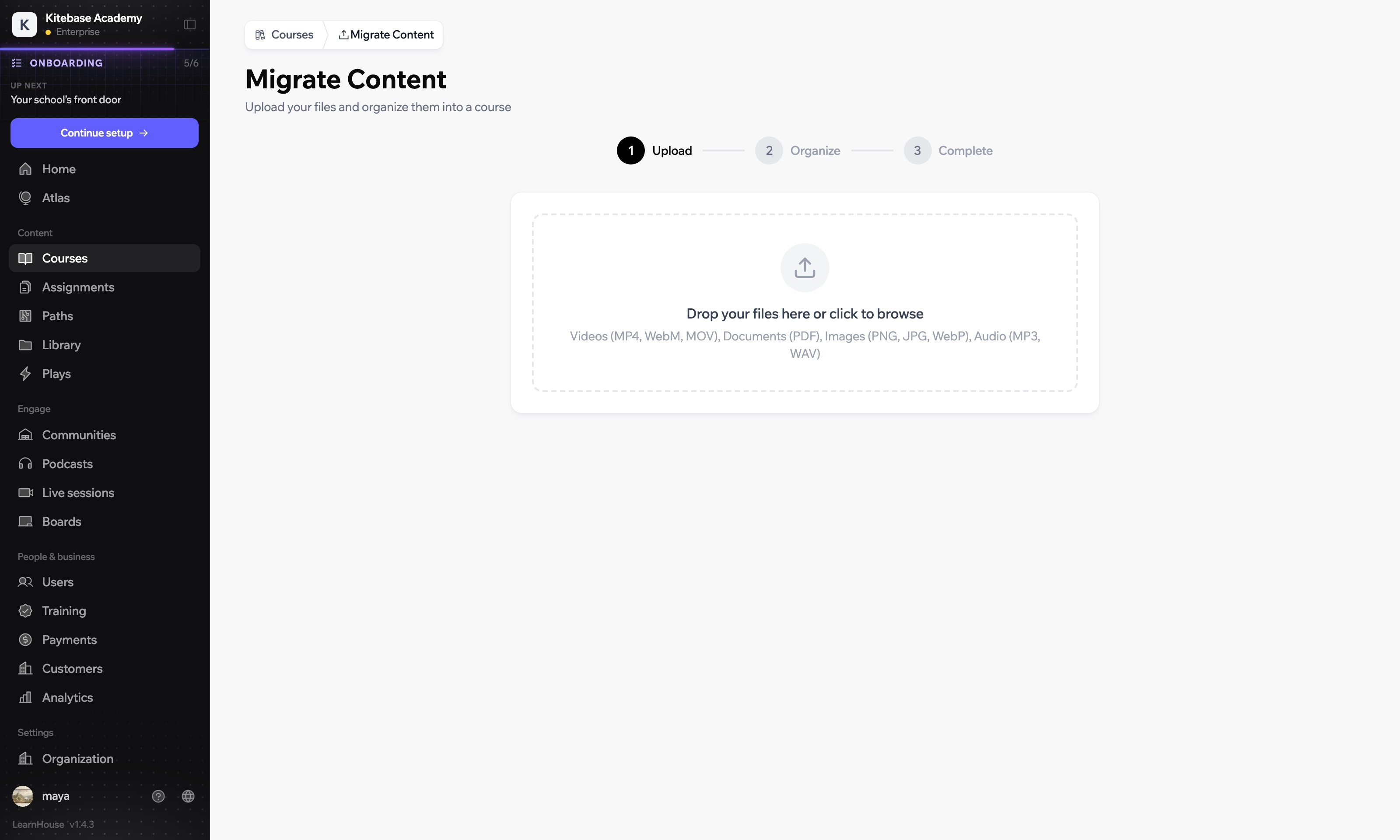
If you look at LearnHouse for this, the Udemy migration page shows how to rebuild a course from your original files.
Frequently asked questions
How much did Udemy pay instructors in 2025?
Udemy's 2025 annual report says instructors collectively earned $168 million, down from $190.6 million in 2024 and $208.2 million in 2023.
Has the Coursera merger changed my Udemy revenue share?
Not according to the companies. At closing they said there were no immediate changes to instructor agreements or economics. The drop of the subscription share to 15% in January 2026 was announced by Udemy in November 2023, before the deal.
Why are my Udemy sales falling while subscriptions grow?
Udemy said in 2025 that it was intentionally reducing single course sales in favor of subscriptions. More learners now reach courses through a subscription, which pays instructors from a shared pool instead of a share of each sale.
Will my Udemy courses move to Coursera?
Not yet. The companies said content stays on Udemy.com or Coursera.org for now, and integration plans would be announced later.
Can I take my Udemy students with me if I leave?
Students who bought on Udemy keep their access on Udemy, and Udemy's messaging rules only allow promotional announcements for your Udemy courses. Your own audience, like a newsletter or YouTube channel, is yours to tell.